
Gulf States Blindsided: Trump's Iran War Leaves Partners Drowning in Chaos They Never Started
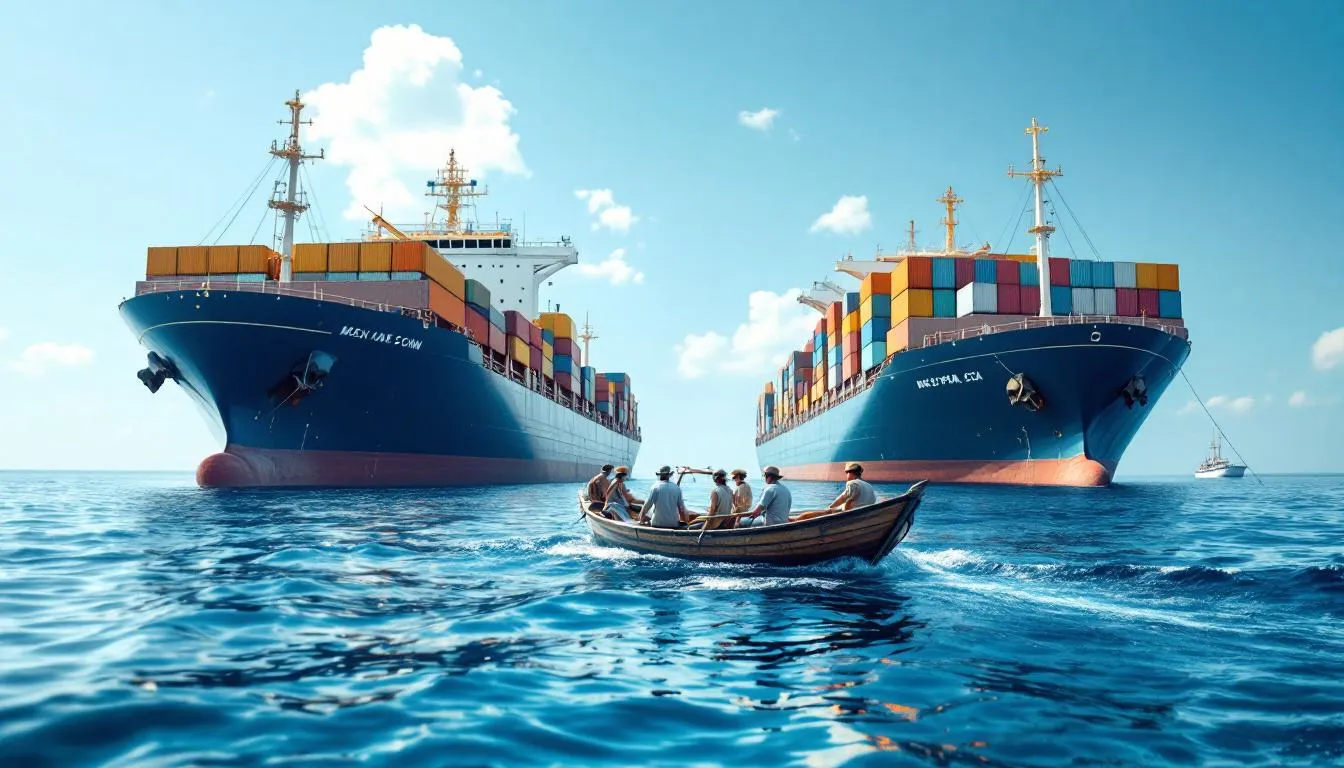
The ports of the Persian Gulf have gone silent. Where oil tankers once moved in steady streams, hundreds now sit idle—trapped, blocked, waiting. In Ras Al Khaimah, a bustling UAE port that should be thrumming with maritime commerce, an eerie quiet has settled over the docks. No ships move. No cranes work. Just waiting. And rage.
This isn't how it was supposed to go down. For decades, Gulf states—Bahrain, Kuwait, Saudi Arabia, the UAE, Qatar, and Oman—rolled out the red carpet for America. They hosted US military bases, spent billions on American weapons systems, and positioned themselves as Washington's most reliable partners in the Middle East. The deal was simple: we give you military protection; you give us stability and access. It worked. Until Trump decided it didn't.
When an Ally Becomes a Liability
In March 2026, the Trump administration launched strikes on Iran without warning its Gulf partners. Not a heads-up call. Not a diplomatic courtesy. Just bombs. The timing was particularly brutal: negotiations over Iran's nuclear program were actually making progress. Diplomats from Oman and across the region were quietly working behind the scenes, trying to find the off-ramp that would prevent exactly this scenario. Trump hit the gas pedal instead.
Within days, Iran fired back. Hard.
Thousands of drones and missiles rained down on the Persian Gulf region. Oil terminals caught fire. Airports got hit. Military bases took rounds. The UAE's main oil facility at Fujairah—a crucial chokepoint for global energy supplies—erupted in smoke and flames after a drone strike. The message was clear: if you're hosting America's war, you're a target.
And here's where it gets worse for Gulf states: they're not even the ones fighting. They didn't start this war. They begged Trump not to start it. Yet they're absorbing the punishment like they're the main combatants.
The Strait of Hormuz: The Chokepoint That's Choking Everyone
One-fifth of global oil supplies passes through the Strait of Hormuz. That's roughly 21 million barrels every single day. It's a 20-nautical-mile corridor between the UAE and Iran—basically a underwater highway between two countries now at war. As Iran tightens its grip on the strait, that highway is becoming a parking lot.
The blockade is costing the region between $700 million and $1.2 billion daily in lost oil exports. Let that number sink in. Every 24 hours, Gulf economies are hemorrhaging money from a war they didn't choose to fight. Airlines are grounding planes. Tourism—Dubai's lifeblood—is getting gutted as foreigners flee the conflict zone. The UAE alone is spending more than $2 billion on air defense systems just to swat down Iranian missiles. That's $2 billion in taxpayer money defending against a war started by someone else.
The human cost? Ask Sumon, a 27-year-old who works at a jet ski rental shop near Ras Al Khaimah port. "For many days, our boats and jetskis aren't allowed to go out because of all these problems and fighting with Iran in the sea," he told reporters. "It's very bad news, we don't have customers and my boss can't give me a salary." His boss can't pay workers. The boats are tied up. No one knows when this ends.
Multiply Sumon by hundreds of thousands of workers across six Gulf states. The economic devastation is real and spreading.
The Trust Is Dead—And That's America's Problem
Here's what Gulf leaders are thinking right now: America threw us under the bus.
Khaled Almezaini, a political science professor at Zayed University in Abu Dhabi, laid it out bluntly: "The perceived Iran threat to the Gulf only became a reality when the US declared the war – Iran did not fire first." Translation: Before Trump struck, the threat was theoretical. After Trump struck, it became real and it came to their front door.
The asymmetry is stunning. In September 2025, Israel launched airstrikes on Qatar—another US ally in the region. Washington did basically nothing. No serious response. No diplomatic pressure on Israel. Nothing. That sent a signal: your alliance with us isn't worth much.
Then Trump pulls the trigger on Iran without consultation. No warning. No strategy session with the people hosting American military bases. Just: we're doing this.
Allison Minor, director of the Atlantic Council's Middle East integration project, framed the core issue: "The most fundamental question is one of consultation. Are the Gulf states actually achieving the kind of partnership and security support that they feel is necessary if the United States is going to engage militarily in the region?"
The answer is obviously no. Gulf states are learning they're not partners—they're props in America's regional theater. When the US wants to flex military muscle, it doesn't ask permission. It just acts. And the Gulf picks up the tab in blood and money.
Oman Breaks Rank: Even the Diplomats Are Fed Up
On Thursday, Oman's foreign minister—the guy who brokered previous Iran-US talks and is basically the region's peacenik—dropped a bomb of his own.
"Oman's view is that the military attacks against Iran by the United States and Israel are illegal, and that for as long as they continue to pursue hostilities, those states that launched this war are in breach of international law," Badr bin Hamad al Busaidi said.
Let that sink. Oman's foreign minister just publicly accused the US and Israel of committing war crimes. Oman. The country that's been America's quiet ally for generations. The nation that housed the secret nuclear negotiations with Iran before Trump torched them. That's how angry things have gotten.
Al Busaidi continued: the US decision to strike Iran while nuclear talks were actually progressing proved this was never about security—it was about reshaping the Middle East to benefit Israel. And it proved that Trump was willing to blow up diplomacy to do it.
The Nightmare Scenario That's Becoming Reality
Here's what keeps Gulf leaders awake at night: they're trapped in the worst possible scenario. They need the US militarily because they can't match Iran alone. But they also know that an all-out war with Iran could destabilize everything—the entire region could spiral into chaos with a weakened, wounded, volatile Islamic republic on their doorstep.
So they're stuck. Push for the US to "finish the job" against Iran to prevent a worse outcome. But simultaneously, they're furious that Trump started this war in the first place. They want it to end. They want things to go back to normal. But they can't say that too loudly because it makes them look weak in front of Iran.
Sanam Vakil, director of the Middle East and North Africa program at Chatham House, called it what it is: "This is the Gulf's worst nightmare. There's deep anger and frustration at the United States because this is not their war, and yet they're bearing the brunt."
Gulf states spent decades pursuing a security partnership with America similar to what Israel enjoys. They thought loyalty and military bases and weapons purchases would buy them that level of consultation and protection. They were wrong. It bought them a front-row seat to a war they didn't ask for.
The Dollar Question: What's Next for the Gulf?
The longer-term play is obvious. Gulf states are going to start looking for alternatives. Not because they want to, but because they have to. Vakil put it this way: "The Gulf is not going to move quickly, nor can they, in finding alternatives to the US. But they're also not going to just double down with an unreliable partner. It will likely move forward in the pursuit of strategic autonomy, which has already been on the horizon, perhaps at a more rapid pace."
Translation: Gulf states are going to start hedging. Build ties with other powers. Diversify their security relationships. Maybe lean more on China or Russia. Not because they prefer it, but because Washington just proved that being a loyal US ally doesn't guarantee consultation or

0 Comments