
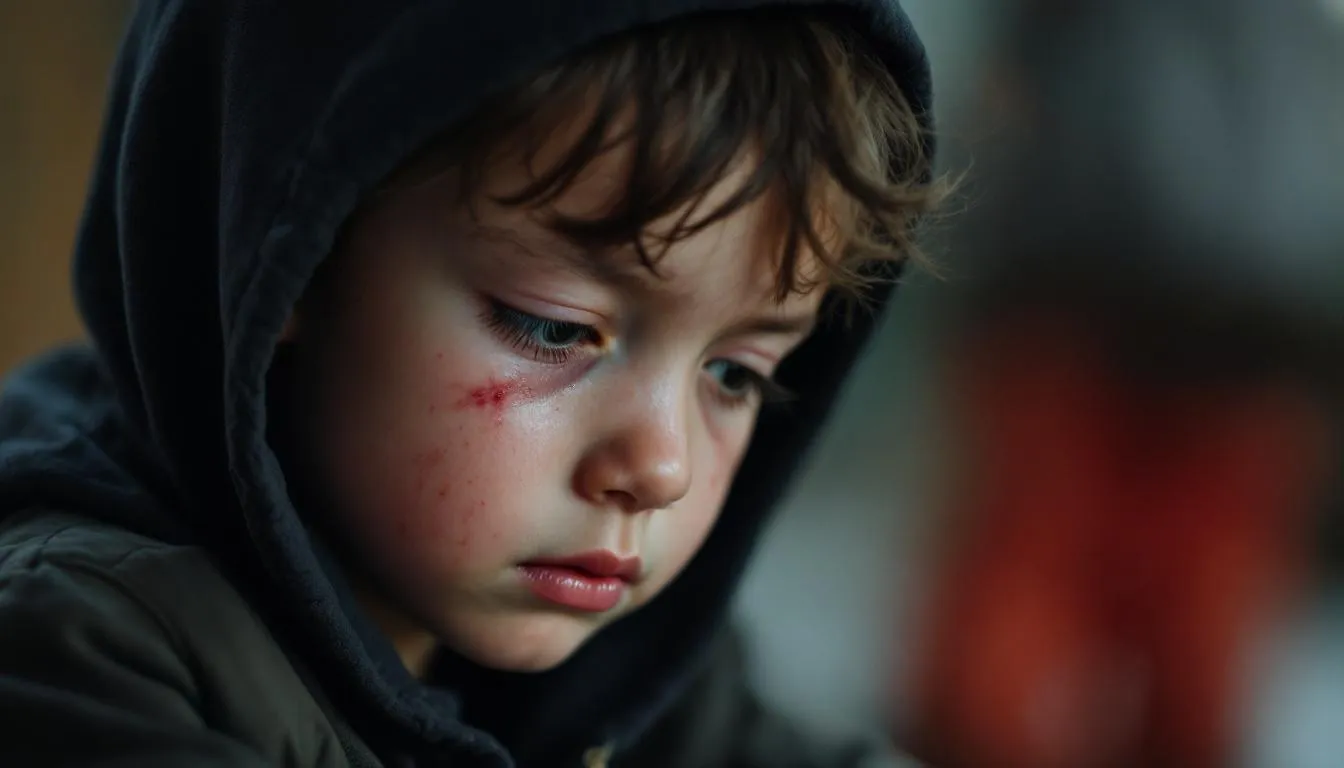
Four Dead in West Bank: A Family Gunned Down as Tensions Spiral Out of Control
A Palestinian family is dead. Four of them. Shot. In their car. On a Sunday morning in the village of Tammun.
Ali Khaled Bani Odeh was 37. His wife Waad was 35. Their sons Mohammad and Othman were just 5 and 7 years old. All four were shot in the head as they drove through the occupied West Bank on March 15, 2026, according to Palestinian health authorities. Two other children in the vehicle survived the barrage—but barely.
This isn't some abstract geopolitical headline. This is a family. Gone. And it's reigniting one of the most volatile conflicts on the planet at a moment when the Middle East is already teetering on the edge.
The Incident: What Happened in Tammun
Israeli military forces say they were conducting an operation in Tammun to arrest Palestinians suspected of "terrorist" activity against security forces. Pretty standard language from a military statement. Except the outcome wasn't standard at all.
According to Israel's account, a vehicle accelerated toward the troops. They perceived a threat. They opened fire. Four people died.
That's the official story. Clean. Defensive. Self-protection.
But here's where it gets messier. Twelve-year-old Khaled Bani Odeh—one of two surviving boys—told reporters he heard his mother crying, his father praying, and then nothing but silence after gunfire tore through the car. "We came under direct fire, we didn't know the source," he said from a hospital bed. "Everyone in the car was martyred, except my brother Mustafa and me."
Khaled also reported that soldiers pulled him from the wreckage and beat him before saying, "We killed dogs." Those words. That's the part that sticks. Not a military operation. Not a tactical response. A moment of dehumanization captured in the testimony of a traumatized child.
The Israeli military announced it's reviewing the circumstances. Translation: They're investigating whether this was justified. But investigations take time, and bodies don't come back while bureaucrats write reports.
The Bigger Picture: A Region Burning
This incident doesn't happen in a vacuum. It's part of a pattern that's accelerating as the region descends into deeper chaos.
Since the U.S.-Israeli war on Iran kicked off on February 28, 2026, the West Bank has become a pressure cooker. Israeli settlers—not just military forces, but civilians with political backing—have killed at least five Palestinians since the war began. Military roadblocks are preventing ambulances from reaching victims. Rights groups say settlers are exploiting the chaos of the larger conflict to settle scores and push Palestinians off their land.
One person was also killed by Israeli settlers in a separate attack overnight on the same day the Bani Odeh family was shot. That's barely making headlines. It's been normalized. A Palestinian dies to a settler's bullet? That's just March 15 in the West Bank.
The situation is grim enough that Gaza isn't even the epicenter anymore. An Israeli airstrike killed three more people in Gaza the same day—a man, his pregnant wife, and their son in Nuseirat. That brings the Palestinian death toll in Gaza since the Iran war started to at least 26. And that's just the official count from health officials. The real number could be higher.
Why Americans Should Care
You might be asking: "This is tragic, but why does it matter to me in Ohio or Texas or California?"
Because America is funding and backing this. U.S. military aid flows to Israel in massive quantities. American diplomatic support shields Israel from international consequences. When the U.S. gets into a war with Iran—which is what's happening right now—it creates the conditions for these kinds of incidents to multiply.
More broadly, every time a story like this breaks, it feeds into narratives that drive recruitment for extremist groups. It destabilizes the Middle East further. It makes American soldiers' jobs harder if they're deployed in the region. It complicates American foreign policy for years to come.
This isn't just about Palestinians or Israelis anymore. It's about whether U.S. Middle East policy is sustainable, whether it's creating more enemies than it's eliminating, and whether we're comfortable with the consequences.
The Official Response: Hollow Words
The Israeli military said the incident is "under review." That's what they always say. An investigation will happen. Some finding will emerge. Maybe nothing will change. Maybe someone gets reassigned. Maybe a statement is issued. The machinery of official accountability grinds slowly, if it grinds at all.
Meanwhile, Khaled and Mustafa have to figure out how to live without their parents and two of their brothers. They have to attend funerals—which they did on Sunday as mourners carried their family's wrapped bodies through the streets. They have to explain to relatives why they survived when their younger siblings didn't.
That's the human cost that doesn't fit in a military statement.
The Escalation Trap
Here's what happens next: Palestinian families grieve. Some of them radicalize. Resistance groups get more recruits. Attacks happen. Israel responds harder. Settlers get bolder. More Palestinians die. The cycle spins faster.
This is how conflicts metastasize. Not through grand strategic decisions, but through moments like this—a family in a car, split-second decisions by soldiers, and the downstream radicalization that follows.
The U.S.-Iran war created the conditions for this escalation. Military roadblocks, heightened tensions, settlers emboldened by the chaos. Without the larger conflict, maybe this family drives safely through Tammun. Maybe Khaled grows up and becomes a teacher. Maybe Mohammad and Othman go to school.
But that's speculation. What's fact is that they're dead.
What We Know About the Context
The West Bank has been a flashpoint for decades. Israeli military control. Palestinian frustration. Recurring cycles of violence. But something shifted when the Iran war began. Suddenly, the West Bank wasn't just a chronic problem—it became a secondary theater in a larger conflict.
Israeli forces have more to do. They're stretched. Settlers see opportunity. The Palestinian authority's control weakens. And families like the Bani Odehs get caught in the middle.
Palestinian health authorities are keeping a body count now. Five settlers killed at least five Palestinians since February 28. That's an average of about one death per week. In a territory with a population of around 3 million, that might not sound like a lot statistically. But statistically dead is still dead. Statistically bereaved children are still traumatized.
The International Angle
This story is playing across global media right now. Reuters is reporting it. Major outlets are covering it. The world is watching how this unfolds.
Diplomatically, incidents like this complicate negotiations. They harden positions. Palestinian leadership can point to this and say, "See? This is why we can't negotiate with people who kill our families." Israeli leadership can point to the vehicle that allegedly accelerated toward troops and say, "See? This is why we need security operations."
Neither side looks good. And the international community has to decide whether to condemn Israel, sympathize with Palestinians, call for calm, or some combination of all three. Usually, it's watered-down statements that satisfy no one and change nothing.
The Survivor's Story
Khaled's testimony matters here. He's 12. He saw his family die. He was beaten by soldiers. And he's still coherent enough to describe what happened in detail to reporters at the hospital.
That's either remarkable resilience or stunning trauma manifesting as hyper-clarity. Probably both.
What sticks with me is what he said about the moments before the shooting. He heard his mother crying. His father praying. And then silence. That's not

0 Comments